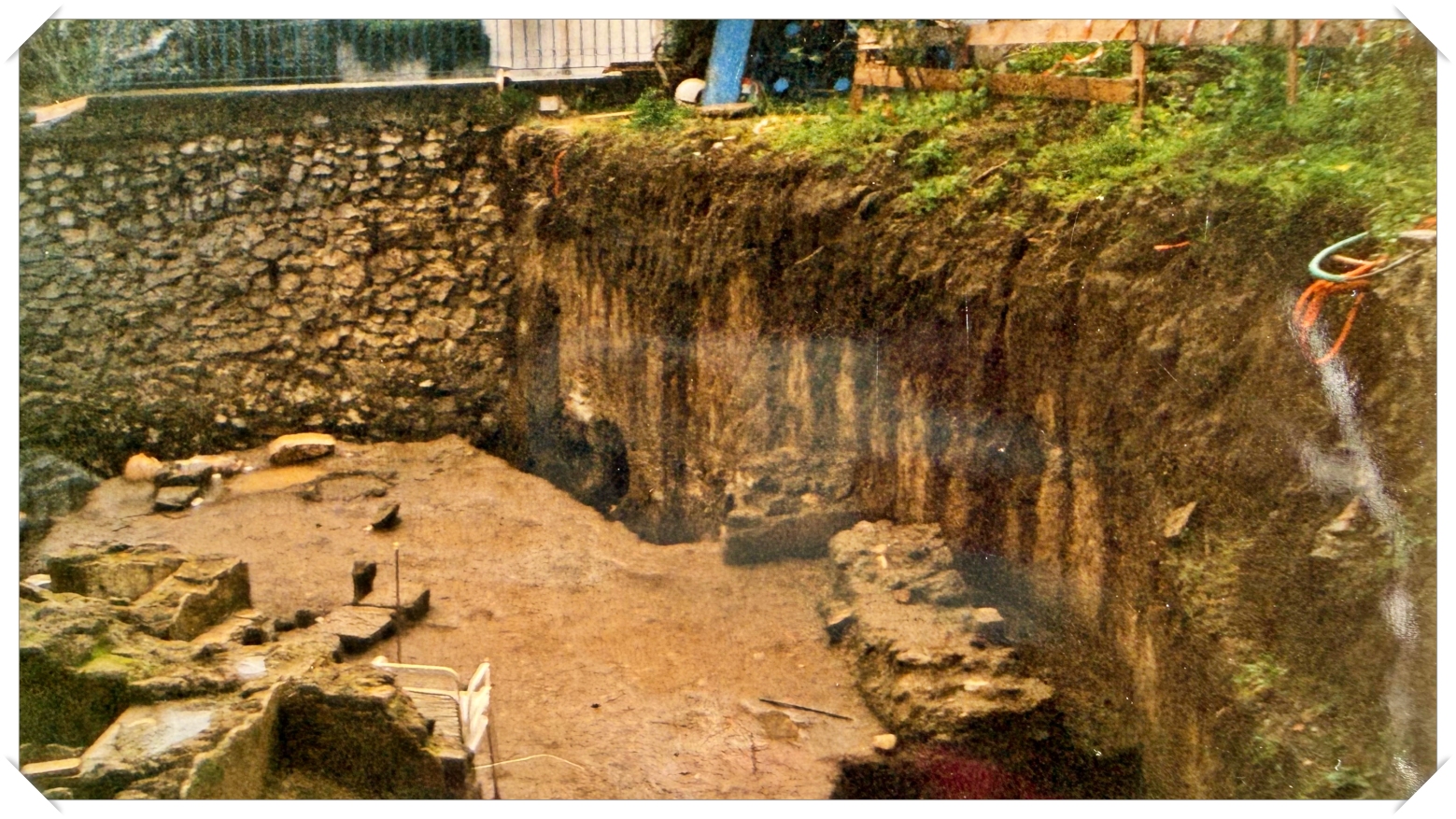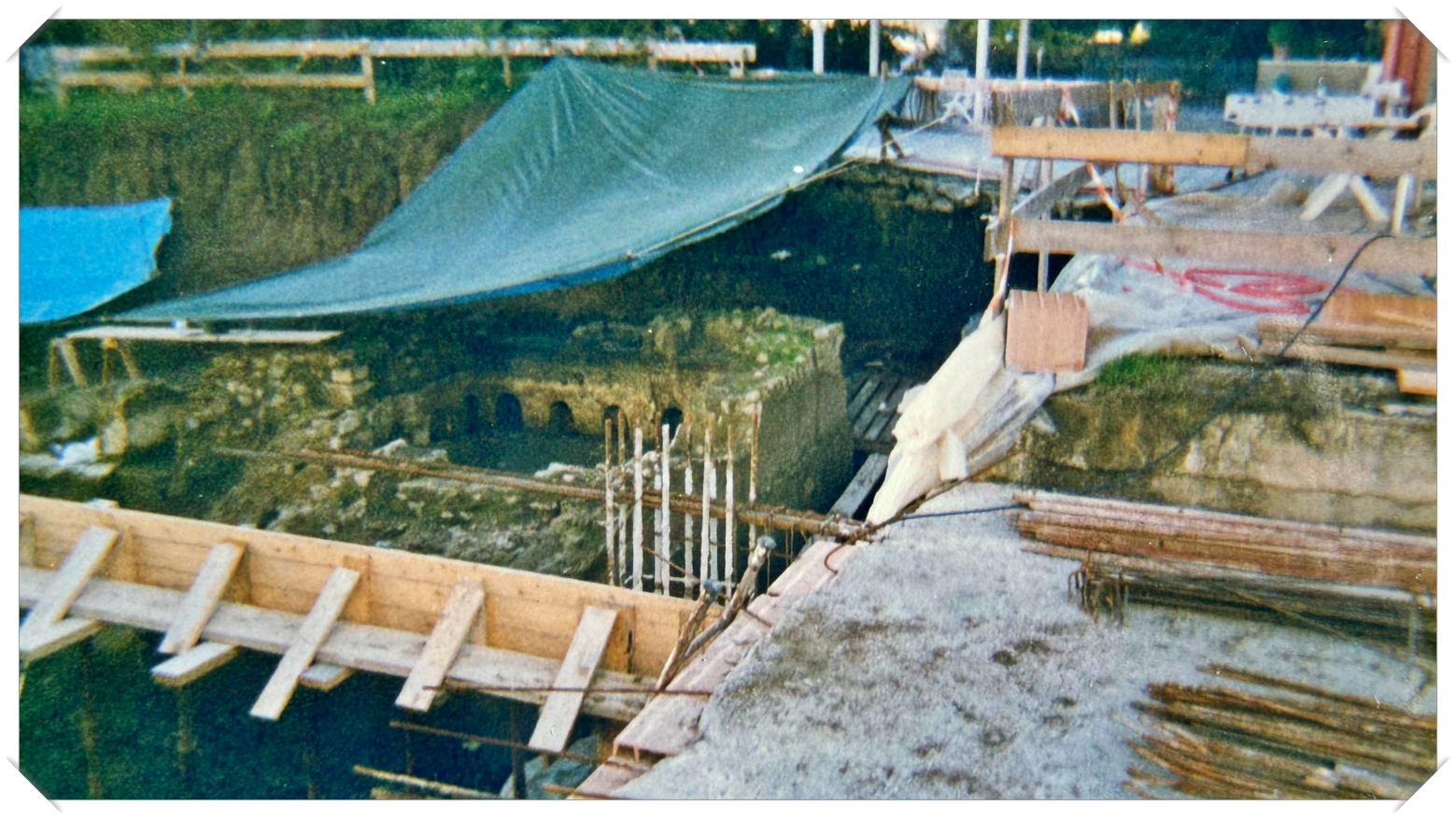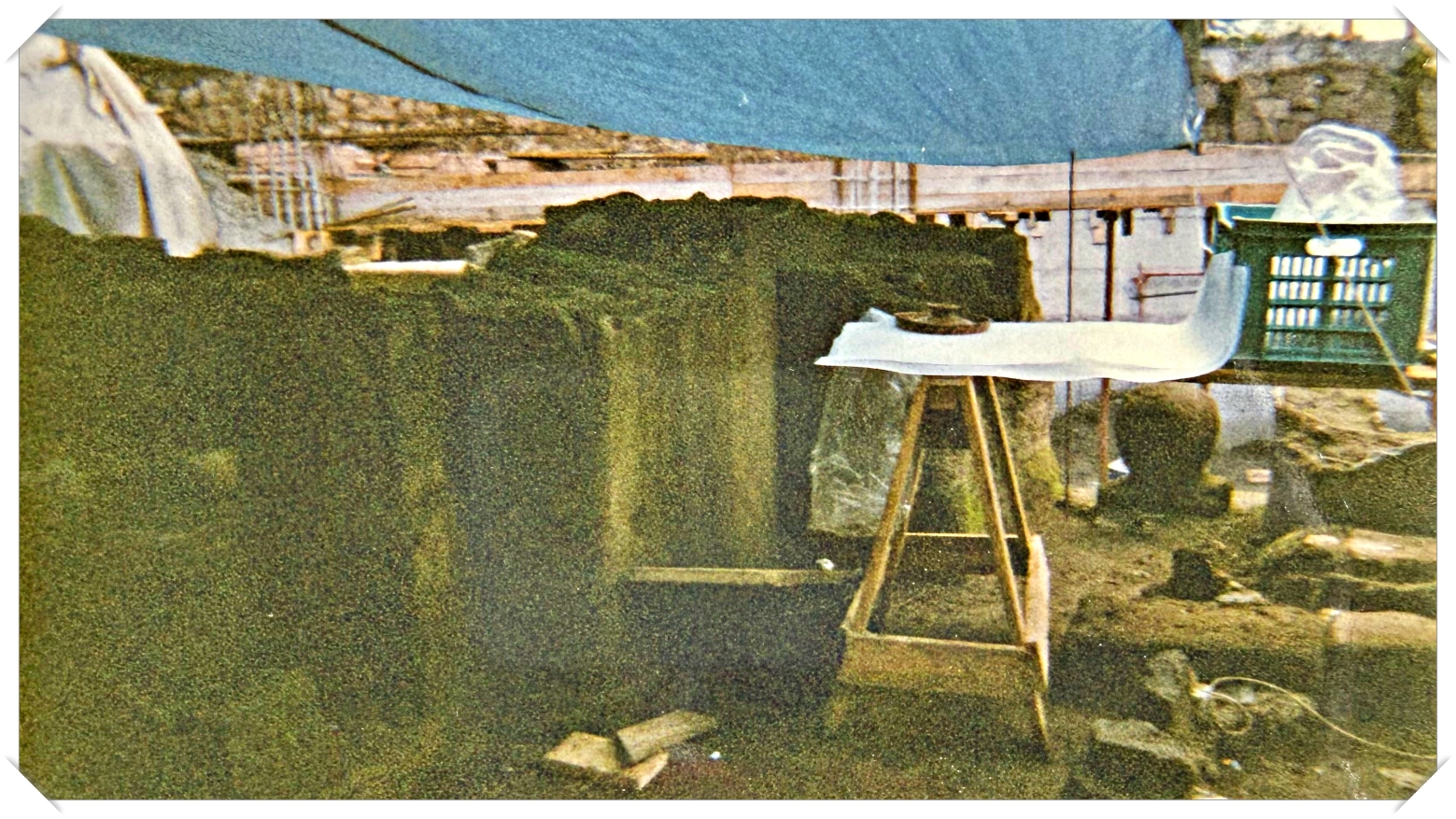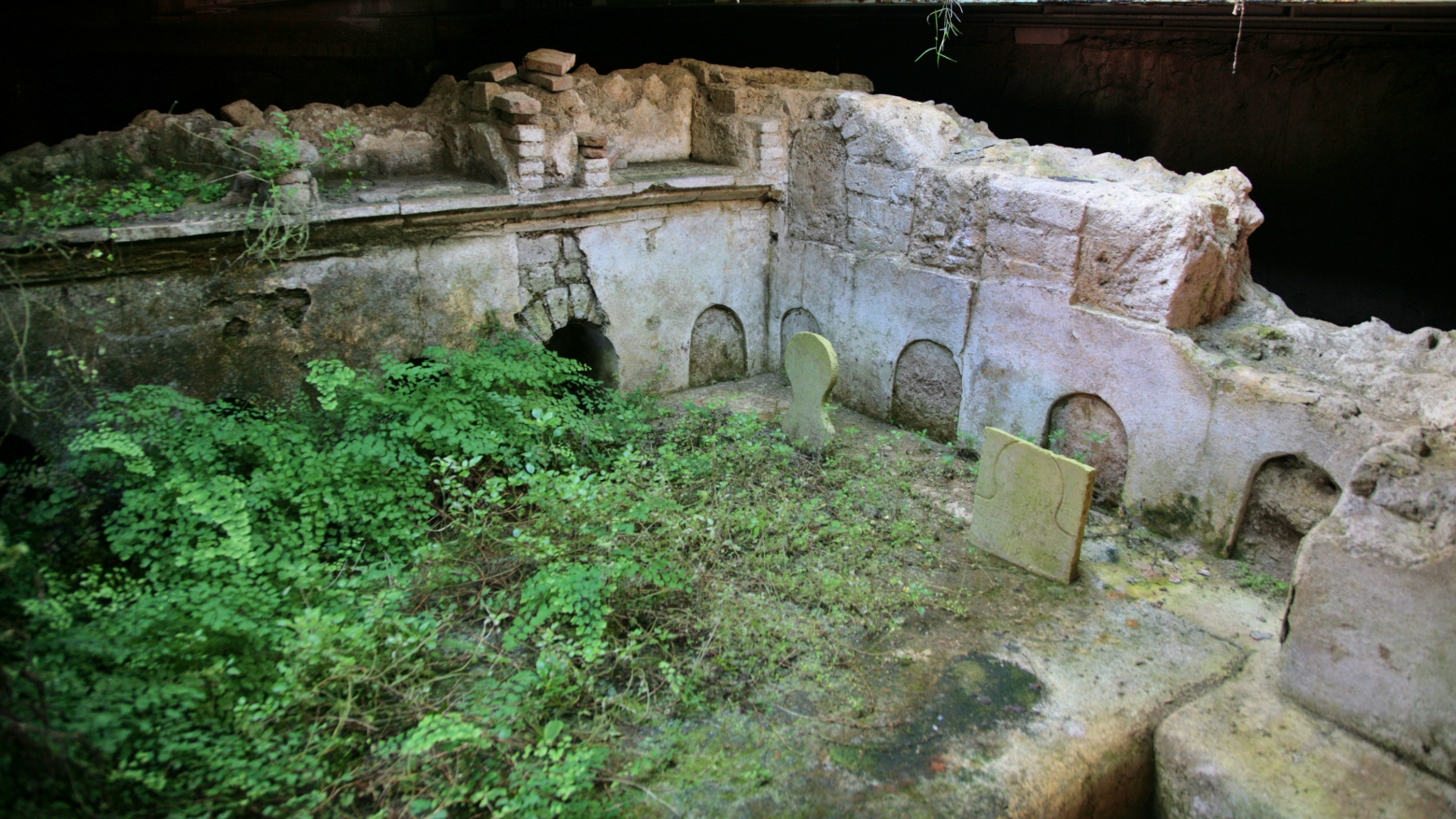



The mausoleum and the Roman necropolis of Via degli Aranci were identified in 1997, during an emergency excavation carried out in connection with the construction of an underground garage on the Sabini property, at number 25 of the street.
Following this discovery, several excavation campaigns were conducted between 1997 and 2001, allowing scholars to significantly deepen their understanding of the site. These investigations brought to light most of the structures and archaeological evidence, and led to the recovery of a substantial quantity of materials. Part of these finds is now preserved at the “Georges Vallet” Archaeological Museum of the Sorrento Peninsula.
Numerous burials had already been identified in the surrounding properties during the 1950s and 1960s. These discoveries confirm that the area was used as a necropolis from at least the Hellenistic period through Late Antiquity.
Near the nearby Porta Parsano, “cappuccina” graves, cinerary urns, and columellae made of grey tuff and marble were uncovered. Alongside these, a hypogeal funerary chamber was also excavated, dating between the late 2nd and the 1st century BC. Its interior walls were decorated with white rectangular panels, framed by thin bands of Pompeian red and enriched with marble crustae, inlaid marble decorations that imitate the First Pompeian Style.
All the burials identified in this area were ultimately sealed by the eruption of Mount Vesuvius in AD 79, an event that contributed significantly to their preservation over time.
In the spring of 2025, the mausoleum area was the focus of a major redevelopment project, aimed at restoring visibility and accessibility to a site that had previously been little known and difficult to experience. The work was carried out by a team of archaeologists and conservators, with the goal of making the complex accessible to visitors and improving public understanding of the site.
At the time investigations resumed, the area was covered by dense vegetation, which was compromising the preservation of the masonry and plaster surfaces. In several places, the plaster had become detached, as had blocks and elements of the wall facing that were improperly resting on the structures.
The restoration was conducted alongside the archaeological excavation, which focused in particular on the interior of the mausoleum. Here, the niches were cleared and archaeological materials associated with the funerary assemblages were recovered. This intervention made it possible to enhance the entire site, also thanks to the discovery of numerous significant objects, now displayed in the exhibition cases.
At the same time, a visitor pathway was created, allowing the site to be explored in its entirety and guiding visitors through the most important points in the history of the necropolis.
The site shows a long and complex sequence of occupation, beginning in the Hellenistic period and continuing until its Late Roman abandonment. The excavation campaigns carried out during the 1990s made it possible to reconstruct this chronological sequence with considerable precision.
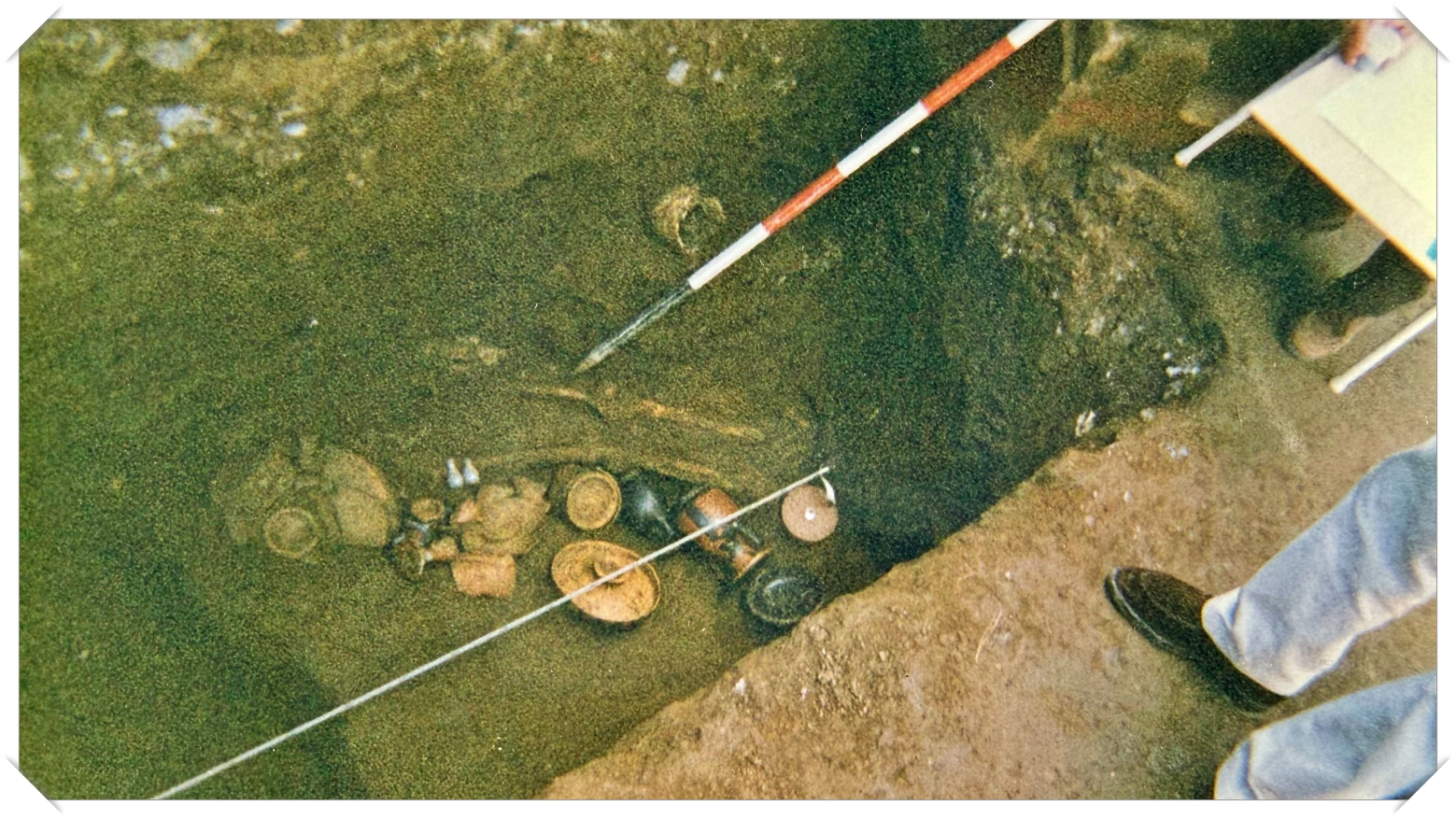
The earliest phase is represented by inhumation burials in simple pits dug into the bare earth, dating to the 4th century BC. The funerary assemblages include locally produced figured pottery, black-gloss vessels, and terracotta unguentaria. Also attributable to the Hellenistic period is a tomb with a “hut-shaped” covering, featuring a double-pitched roof and built with large blocks of grey tuff.
During the Late Republican period, the first funerary monuments were erected. Burials belonging to this phase are documented by grey tuff cippi, discovered in the northern sector of the site.
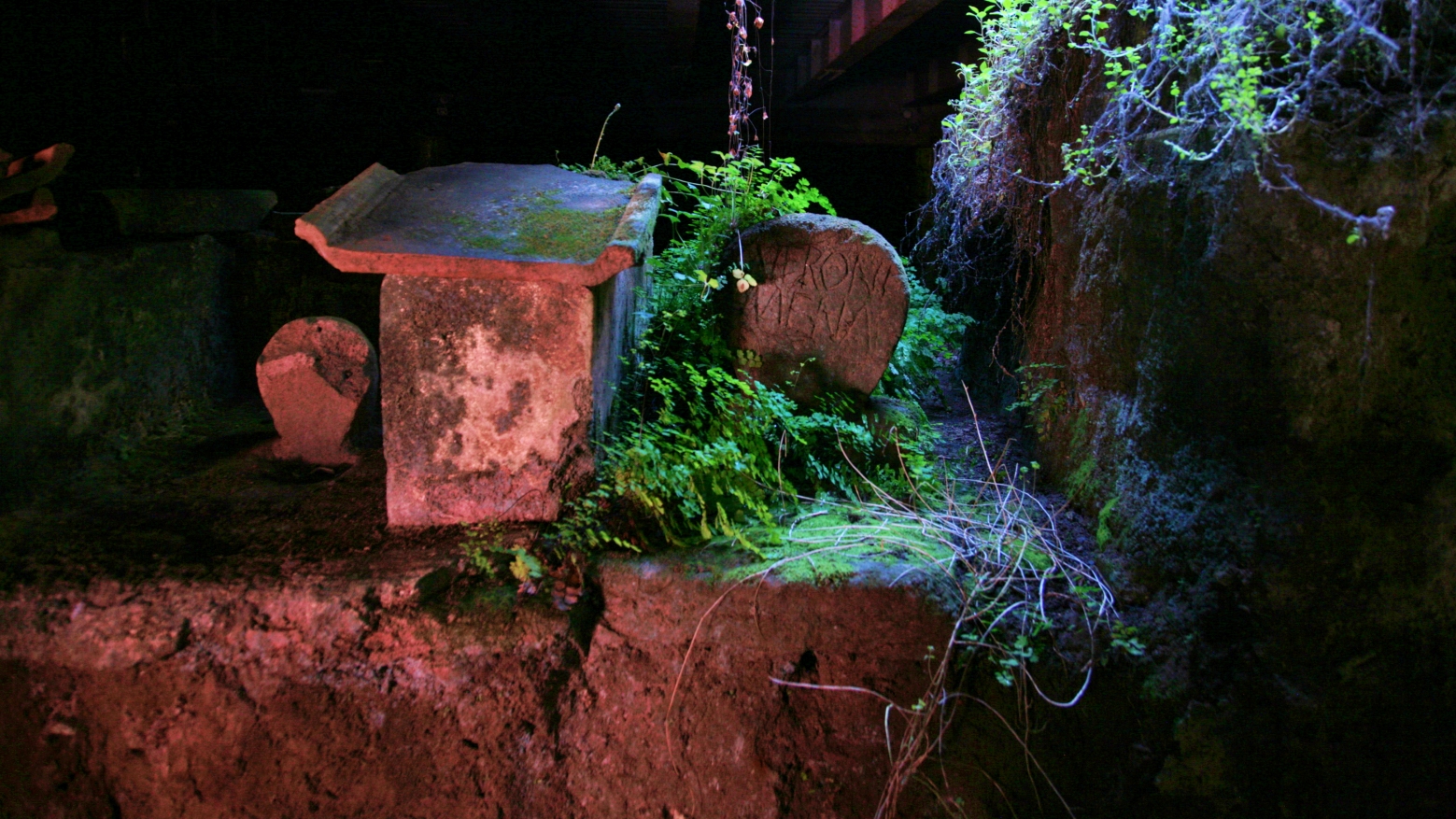
The mausoleum proper dates to the first half of the 1st century AD, together with the funerary enclosures that surrounded it. In this area, around sixty columellae and funerary cippi, made of white marble and local grey tuff, were arranged facing north-west. In front of each marker, tuff blocks were placed to receive offerings. The eruption of Mount Vesuvius in AD 79 sealed the monument, causing the collapse of its roof and a temporary abandonment of the area.
Shortly thereafter, however, the necropolis came back into use. New burials were inserted inside the mausoleum, marked by two marble cippi, while the surrounding area continued to be occupied at least until Late Antiquity, with the construction of “cappuccina” graves.
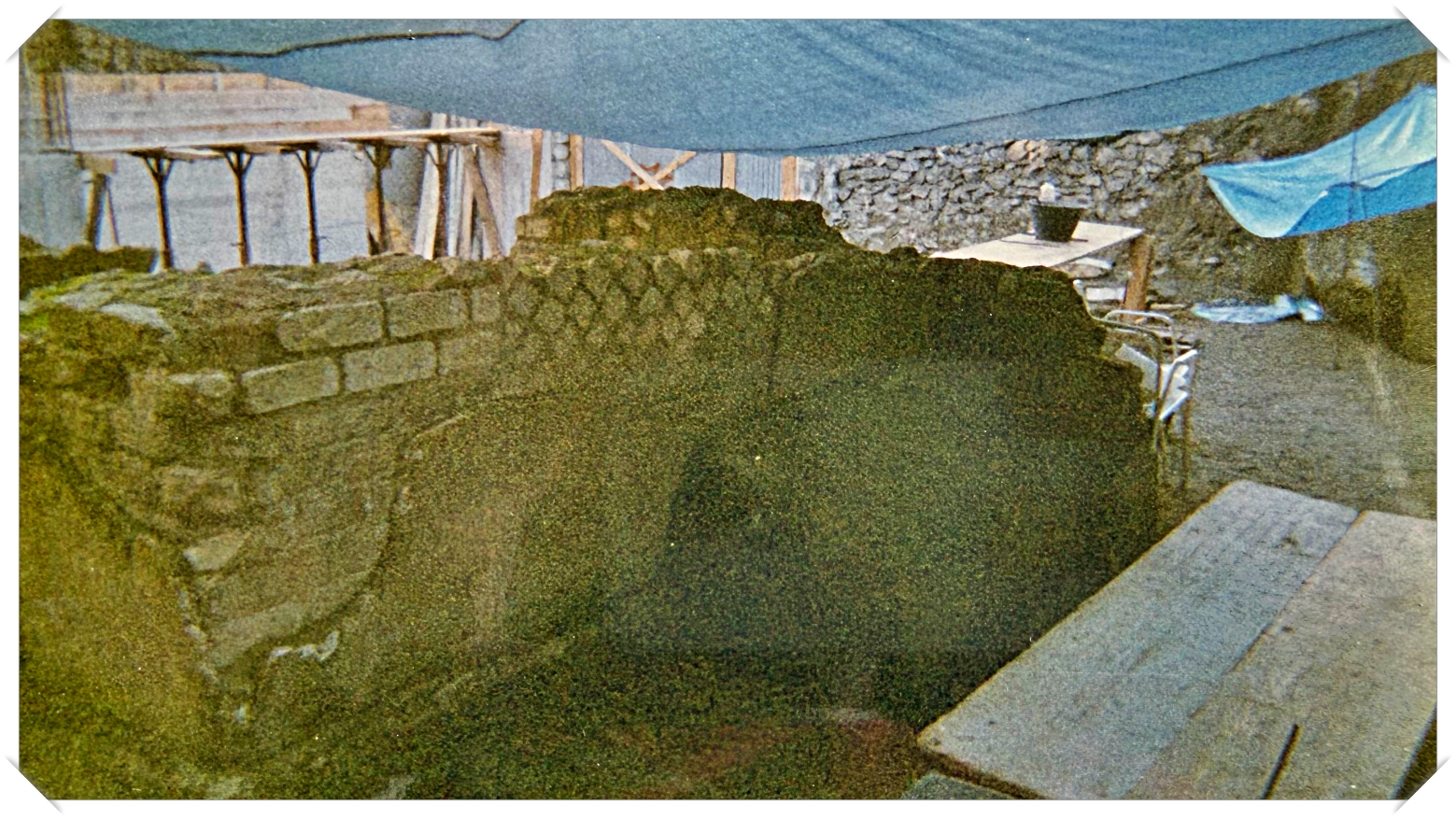
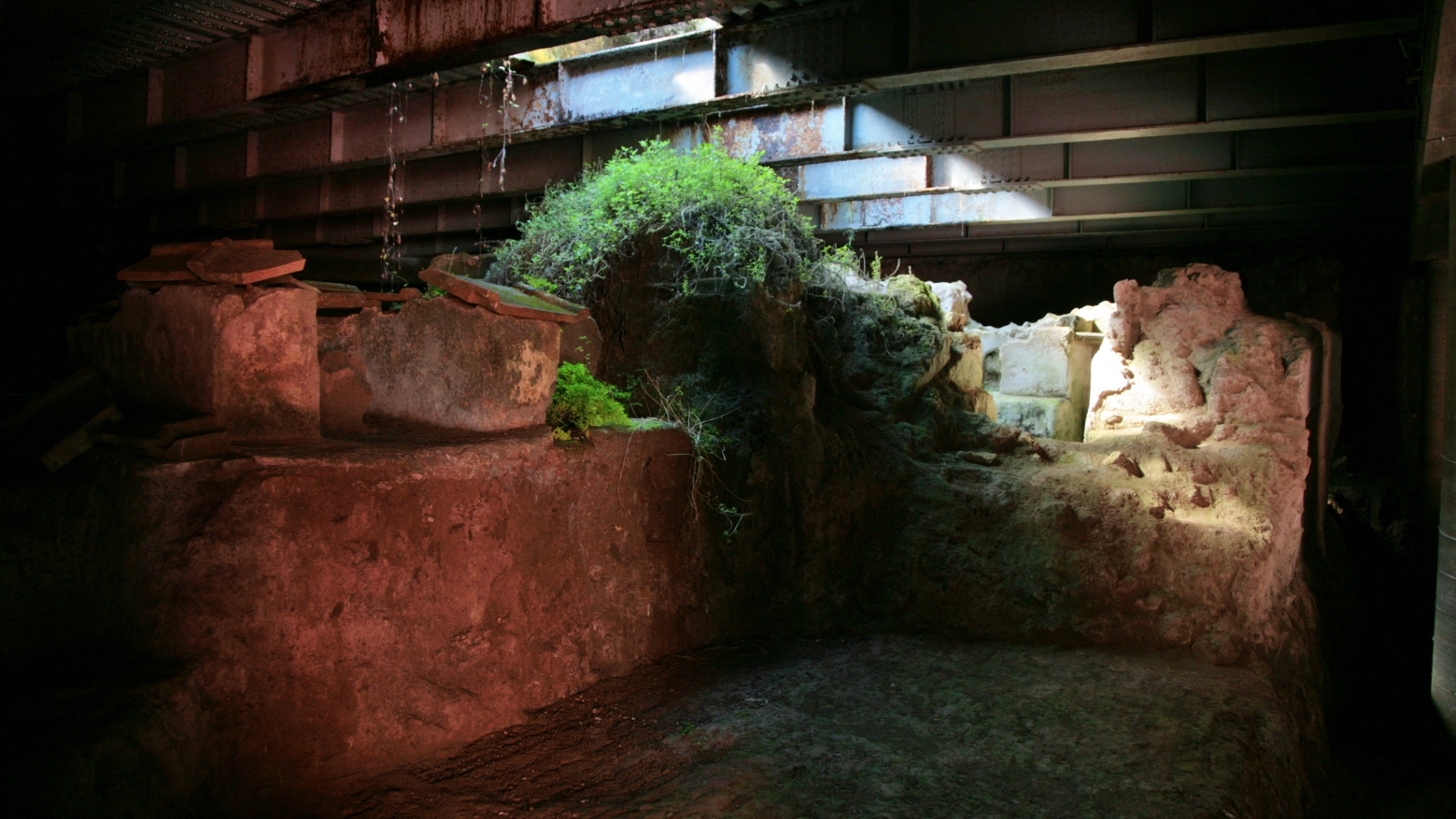
The mausoleum is located in the north-western sector of the investigated area and is built with a facing in opus reticulatum, reinforced by corner chains in opus vittatum made of grey tuff. This construction technique involves the use of squared stone blocks, arranged in regular horizontal courses.
The monument has an approximately rectangular plan and is organized as an internal funerary enclosure. Along three sides—east, west, and south—and on two superimposed levels, small barrel-vaulted niches open, each intended to house a single cinerary urn.
The excavation of these niches made it possible to recover part of the urns and the associated funerary assemblages, unfortunately disturbed by the eruption of AD 79, which compromised their original arrangement. Among the finds are glass balsamaria, small oil lamps, lidded ollae, and thin-walled terracotta vessels.
Alongside the ceramic containers, vessels made of local grey tuff were also identified, fitted with roughly worked lids. Inside these containers, a second terracotta vessel was placed, intended to hold the ashes of the deceased.
A brief yet intense visit leads through the remains preserved in their original setting — exactly where they were found over two thousand years ago — offering the rare emotion of walking through history and still feeling its living breath